

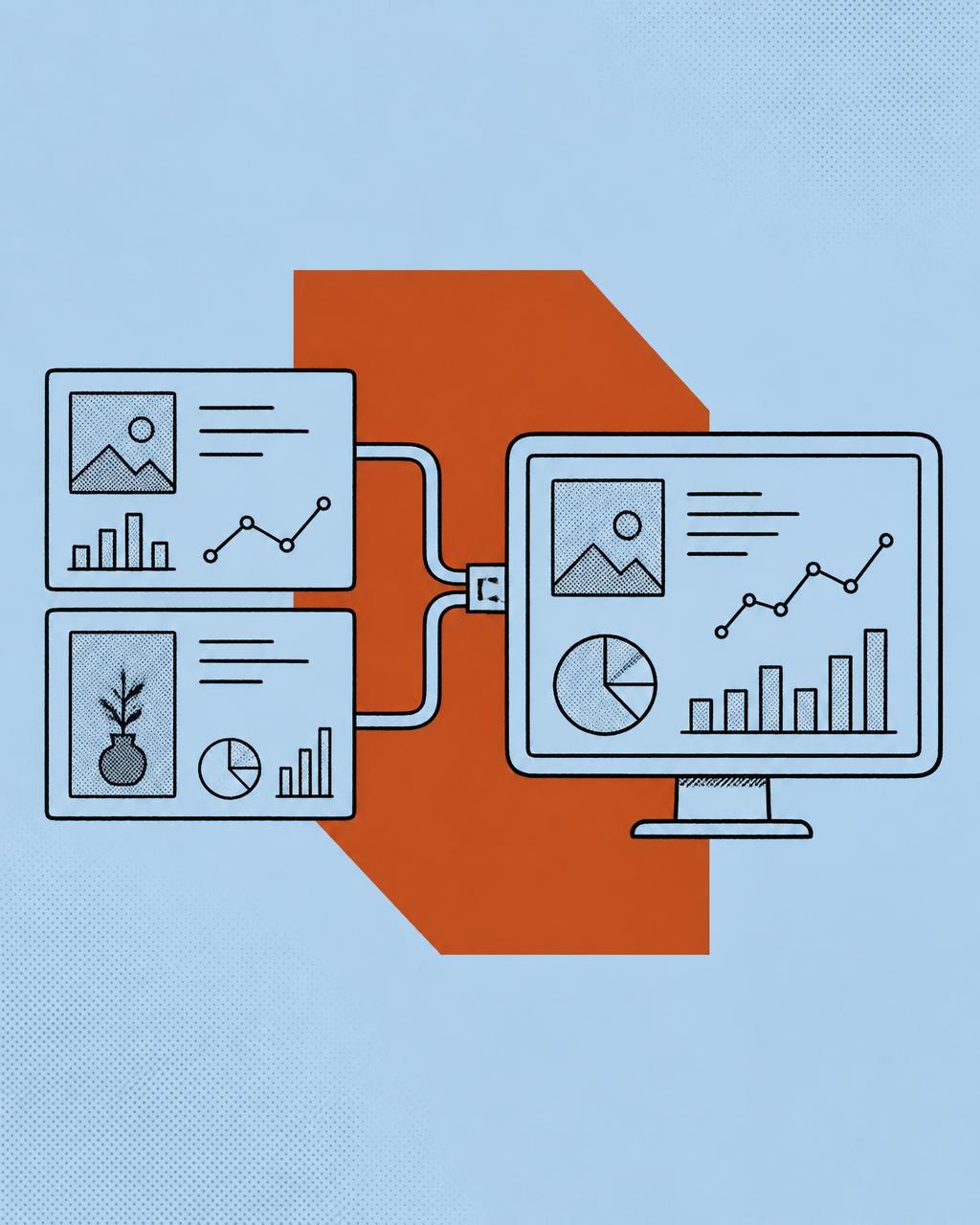

This comparison gets framed as a feature war, which is why most articles about it are useless. Both platforms will store contacts, show a pipeline, send emails and produce a forecast. The real decision is architectural: do you want a sales tool that integrates with your marketing stack, or a single system where marketing, sales and service share one data model?
We implement and operate both. Below is the honest version of where each one wins.
What Pipedrive is genuinely great at
Pipedrive was built by salespeople for salespeople and it shows. The pipeline view is the product, not a tab inside it. A new rep can be productive within an hour. Deal-stage discipline is easy to enforce because there is nowhere else to hide, and activity-based selling — the philosophy that you control actions, not outcomes — is baked into the interface rather than bolted on.
It is also considerably cheaper at the entry and mid tiers, and the pricing is predictable. For a five-person sales team selling a well-understood service, Pipedrive can be live, adopted and useful in a fortnight for a few hundred dollars a month.
- Fastest path to a disciplined sales pipeline.
- Excellent adoption because there is very little to ignore.
- Strong deal, activity and forecasting reporting for a sales-led business.
- Lower licence cost and simpler tiering.
What HubSpot is genuinely great at
HubSpot's advantage is not that it has more features — it is that marketing and sales operate on the same objects. A contact's ad click, email engagement, page views, form submissions, sales conversations, deal history and support tickets are all attached to one record, in one timeline, queryable by one reporting engine.
That architecture unlocks a specific set of capabilities that matter enormously if you spend money on paid media: multi-touch revenue attribution across the whole journey; offline conversion sync that pushes qualified-lead and closed-deal events back to Google and Meta so their bidding optimises to revenue; CRM-driven audiences and exclusions; lifecycle-stage automation; and reporting that ties campaign spend to closed-won dollars without a data warehouse project.
If your growth depends on paid media, the CRM is not a sales tool — it is the training data for your bidding algorithms.
Head to head, on the things that actually differ
Marketing automation
Pipedrive's Campaigns add-on handles email marketing competently and its automations handle sales sequencing well. It is not a marketing automation platform, and it does not pretend to be one. HubSpot's workflow engine acts on any property of any object, branches on behaviour and scores, and manages lifecycle transitions across the whole funnel. If your marketing needs nurture programs, lead scoring and behavioural segmentation, Pipedrive means adding and integrating a second platform.
Attribution and reporting
This is the widest gap. HubSpot ships multi-touch revenue attribution — first touch, last touch, linear, U-shaped, W-shaped, time decay — natively, across closed revenue. Pipedrive reports well on the sales pipeline but has no native view of which marketing touches created the pipeline, so you end up assembling that picture from GA4, spreadsheets and hope.
Data model and scale
HubSpot's contact, company, deal and ticket objects, plus custom objects on Enterprise, handle complex relationships: a property manager with dozens of landlords, a franchise group with a parent and sites, a clinic with practitioners and locations. Pipedrive's simpler organisation-and-person model is faster to grasp but starts to strain when the relationships are genuinely many-to-many.
Cost, honestly
Pipedrive is cheaper on licences and stays cheaper. HubSpot's Professional tiers are a real commitment, and the cost that surprises people is the onboarding fee plus the internal time to configure lifecycle stages, properties and reporting properly. The counterweight is stack consolidation: if HubSpot replaces a marketing automation tool, a scheduling tool, a chat tool, a forms tool and a reporting tool, the total cost of ownership often lands closer than the licence sticker suggests. Do that maths with your actual invoices, not with a vendor's calculator.
Choose Pipedrive when…
- Your growth is outbound or referral led and marketing is a small line item.
- The sales team has rejected heavier CRMs before and adoption is the binding constraint.
- Your deal process is linear and your data relationships are simple.
- You already have a marketing stack that works and no appetite to consolidate it.
Choose HubSpot when…
- You spend meaningfully on Google and Meta and want bidding to optimise to qualified pipeline.
- You need to answer "which campaigns produced closed revenue" without a data project.
- Marketing, sales and service currently argue about lead quality using different numbers.
- You want lifecycle automation, nurture and scoring in the same system as the pipeline.
- You are consolidating four or five tools and want one reporting layer.
The migration question
Most businesses considering the move already run Pipedrive and are frustrated by the gap between marketing activity and sales outcomes. A migration is genuinely disruptive, and it deserves a plan: audit and clean the data before it moves, map properties and pipeline stages deliberately rather than replicating old mess, migrate contacts, companies and deals with owners and history intact, rebuild automations in HubSpot's model instead of porting them literally, then run both in parallel briefly while the team learns.
For a mid-sized team that is typically a four to eight week program. The mistake to avoid is a lift-and-shift: a migration is the one moment when you can fix a decade of inconsistent data hygiene, and skipping that step means paying for a more powerful system that reports the same unreliable numbers.
The one-question version
If your paid media performance depends on the CRM feeding outcomes back to the ad platforms — and for most advertisers in 2026 it does — HubSpot's architecture is worth its price. If sales is your engine and marketing is a support function, Pipedrive will do the job for a fraction of the cost and your team will actually use it. Both are defensible answers. Choosing the wrong one for the wrong reason — usually price alone, or brand familiarity alone — is what costs money.
Related services

Written by
Danielle Magbanua
HubSpot Specialist
Danielle architects CRM and automation inside HubSpot — lifecycle stages, pipelines, lead routing and reporting that sales teams actually trust and use.